The Ultimate Guide to Reclaimed Wood Furniture: Sustainability, Quality, and Care
Reclaimed wood furniture has become a popular choice for those who value sustainability without compromising on quality. From rustic dining tables to sleek modern consoles, it blends eco-conscious design with the timeless appeal of solid wood.
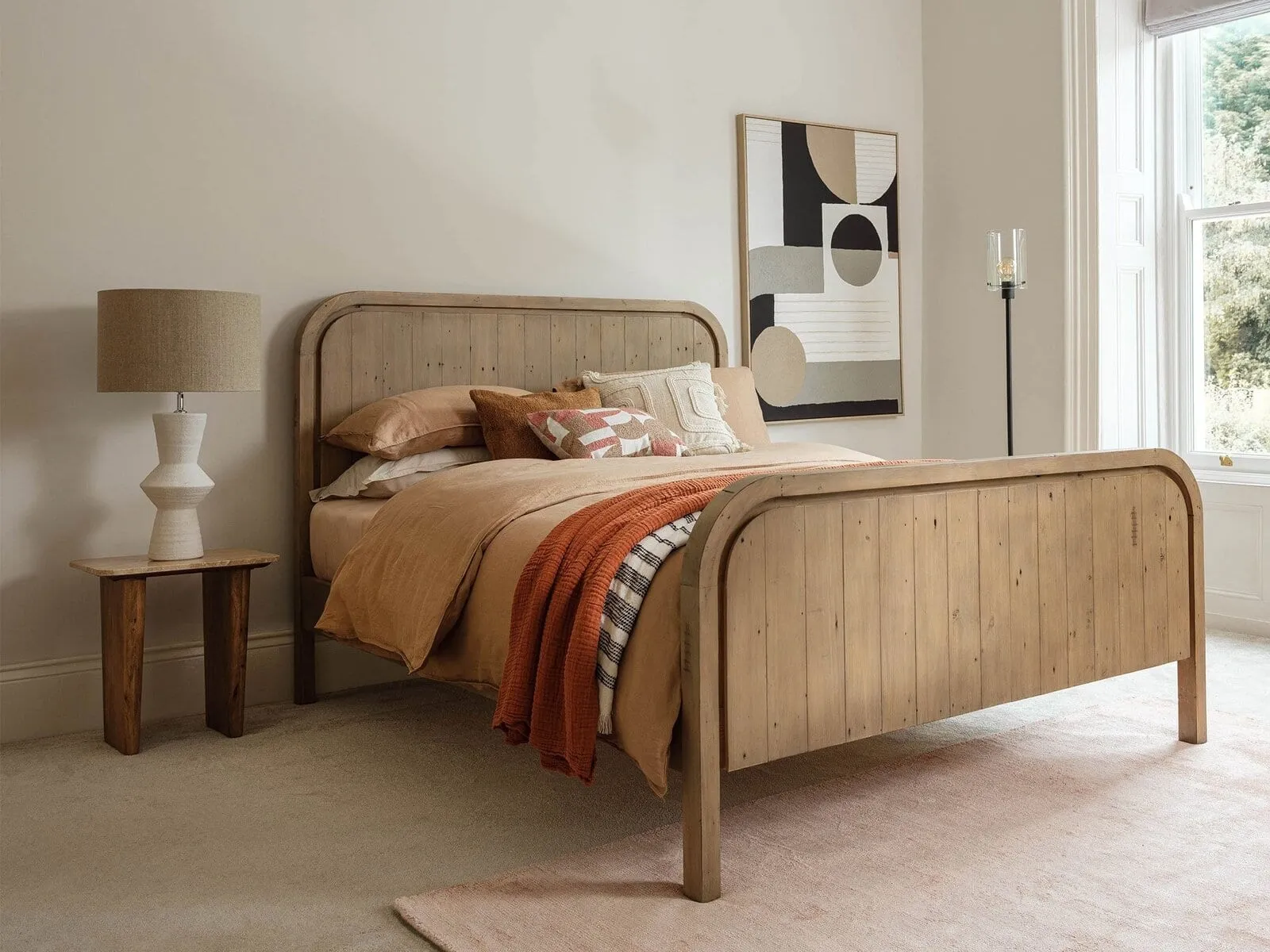
Tosca Bedroom Furniture
A modern furniture collection that defies the assumption that all reclaimed timber furniture must look rustic.
This guide explains why reclaimed wood is a smart option, what’s driving its popularity, the most sought-after wood types, surprising facts, and how to keep your pieces looking their best.
Why Choose Reclaimed Wood Furniture?
Reclaimed wood furniture is made from timber that’s been given a second life, such as old barn beams, factory floorboards, or shipping pallets. Its sustainability comes from reducing the need to harvest new trees, cutting down on deforestation and the energy used in logging. By keeping wood out of landfills, it’s a win for the environment.
Beyond its green credentials, reclaimed wood offers the durability and charm of solid wood. Often sourced from old-growth trees, it’s denser and more stable than much of today’s fast-grown lumber.
Naturally seasoned over decades, it’s less prone to warping or cracking. The unique marks, like nail holes, weathered patina, or knots, give each piece a one-of-a-kind story, unlike mass-produced furniture.
Many makers pair it with eco-friendly finishes such as natural oils or waxes, keeping it kind to both the planet and your home’s air quality.
Is Reclaimed Wood Furniture a Trend?
In 2025, reclaimed wood furniture is gaining popularity, fueled by a focus on sustainability and a love for authentic, textured designs. It fits well with trends like biophilic design, which connects interiors to nature, and the vintage revival, blending rustic charm with modern aesthetics. Social media posts highlight its eco-friendly appeal and unique look, with weathered patinas and live-edge details standing out.
Popular Wood Types
While oak is a classic, teak and mango are leading the reclaimed furniture scene. Here’s why:
Teak: Valued for its durability and natural oils, reclaimed teak is often sourced from old structures like houses or bridges. Its strength (Janka hardness 1155-2330) and weather resistance make it ideal for indoor and outdoor pieces, from tables to cabinets. Its warm, golden hue darkens over time, adding richness, and FSC-certified reclaimed teak boosts its eco-appeal.
Mango: A sustainable choice, mango wood comes from trees harvested after they stop bearing fruit, which takes just 7-15 years. Its dense grain (Janka hardness 1070-1120) rivals oak, making it great for beds and dining tables. Mango’s varied patterns, with streaks of pink, yellow, or black, create an artistic, bespoke vibe.
Oak: Though less common in reclaimed form, oak (especially white oak) is used in pieces like coffee tables or shelving. Its light tones and durability are appreciated, but its slower growth cycle makes reclaimed oak less abundant than teak or mango. You’ll see it more in new wood or veneers in minimalist designs.
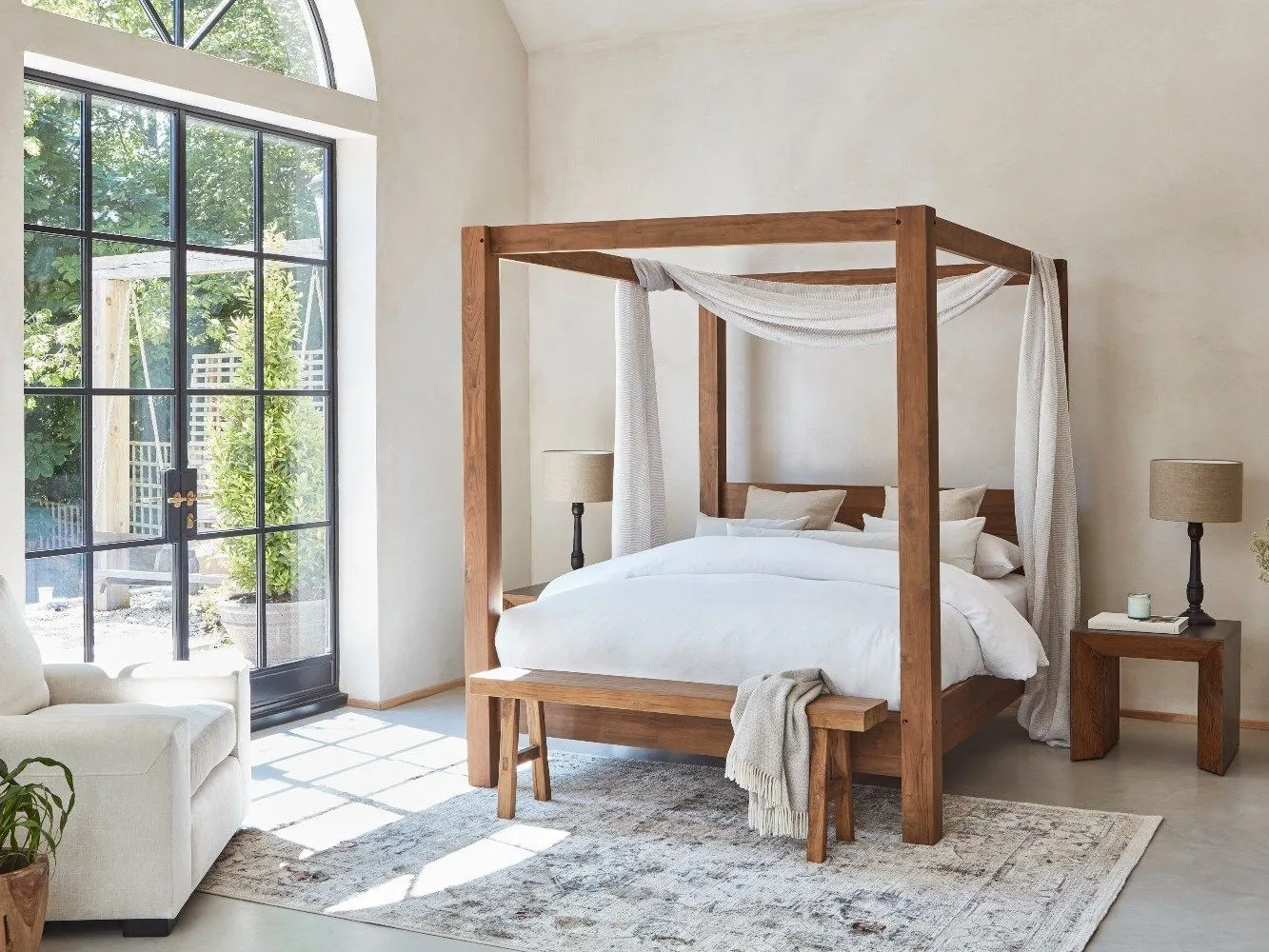
Millbrook Four Poster Bed
A chunky 4-poster made from solid reclaimed timber, blending rustic flair with a sensitivity for modern living.
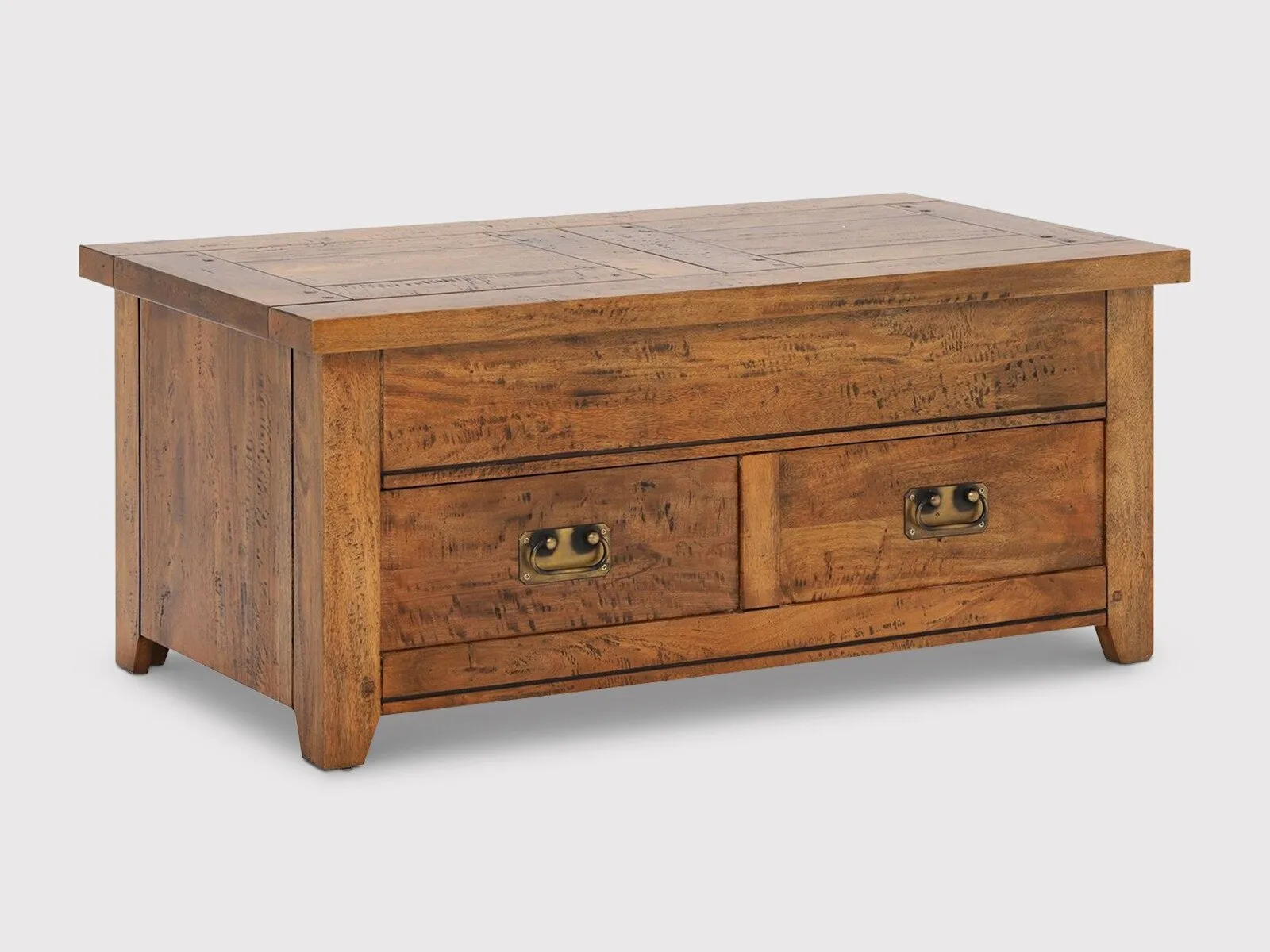
New Frontier Storage Coffee Table
Made from reclaimed mango wood with antique brass handles and a distresses finish for rustic appeal.
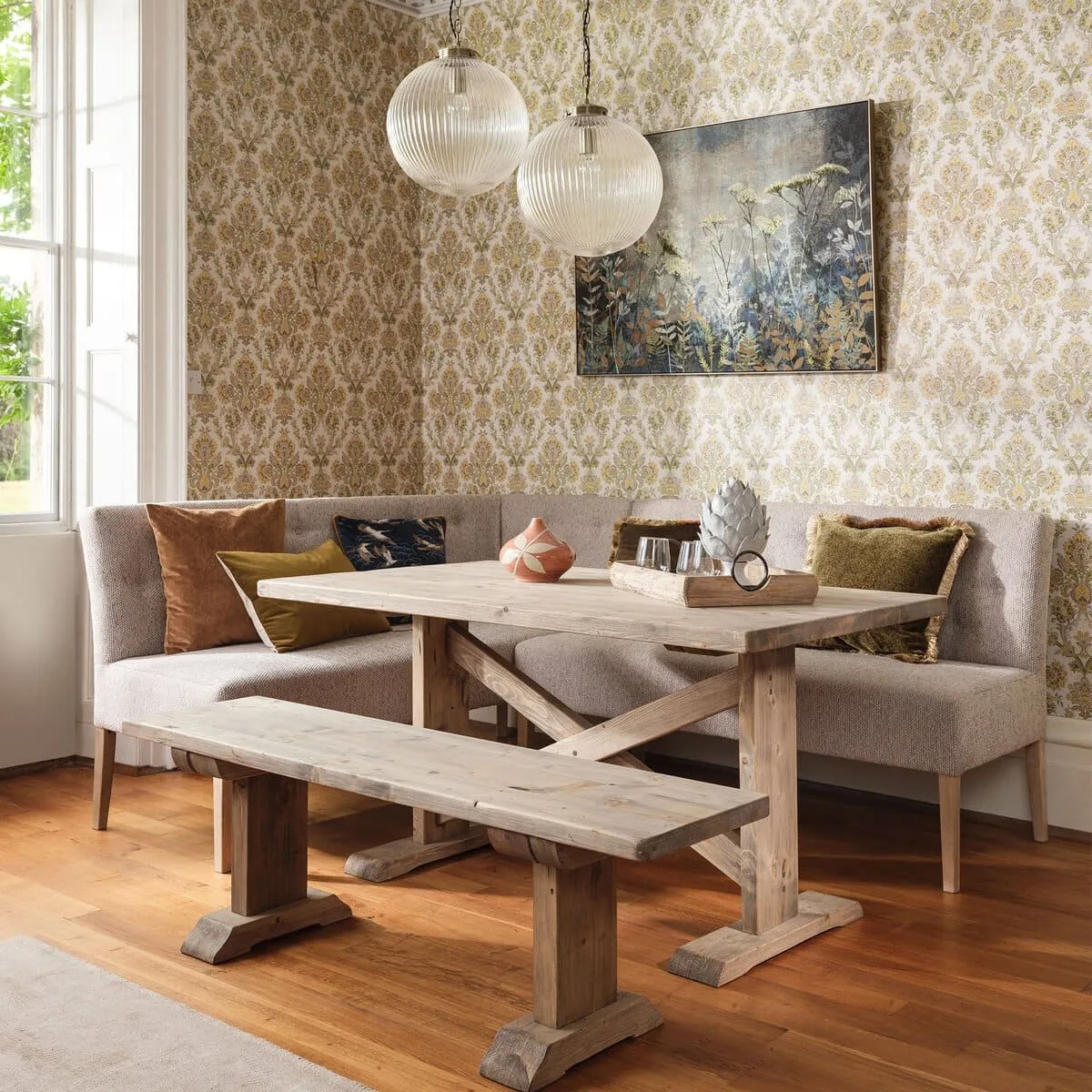
Newsham Reclaimed Wood Dining Table
A rustic-style table with a matching bench and a greyed-oak wax finish
Surprising Facts About Reclaimed Wood
Reclaimed wood has some unexpected traits:
- Stronger Than New Wood: Old-growth reclaimed timber, like oak or teak, is often denser and more stable than new wood, thanks to mature trees and natural seasoning over decades.
- Rich History: Your furniture might come from a 19th-century barn, a shipwreck, or an old factory. Some makers trace the wood’s origins, adding a storytelling element.
- Not Just Rustic: While known for farmhouse styles, reclaimed wood works in modern designs, like polished teak consoles or minimalist mango shelves.
- Sustainability Caveat: While greener than new wood, sourcing and transporting reclaimed wood can have a carbon footprint if not done thoughtfully. Always check the maker’s practices.
How to Care for Reclaimed Wood Furniture
To keep your reclaimed wood furniture looking stunning, follow these gentle care tips:
- Regular Cleaning: Wipe weekly with a soft, dry cloth to remove dust. For deeper cleaning, use a damp cloth with mild soap and water, but don’t soak the wood, as reclaimed pieces can be porous. Dry immediately to avoid water marks.
- Avoid Harsh Chemicals: Skip ammonia, bleach, or all-purpose cleaners, which can strip natural finishes or damage the wood’s texture. Use non-toxic cleaners to maintain its eco-friendly edge.
- Maintain the Finish: For oiled finishes (common with teak or mango), reapply food-safe mineral oil or linseed oil every 3-6 months. Apply sparingly, let it soak, and wipe off excess. Test on a hidden area first. For waxed finishes, buff with natural beeswax polish every six months for a subtle sheen.
- Protect from Damage: Keep furniture out of direct sunlight to prevent fading or drying. Use coasters or mats for drinks and hot items, as reclaimed wood can be more porous. For scratches, lightly sand with fine-grit sandpaper (220) and reapply oil or wax.
- Control Humidity: Reclaimed wood can expand or contract in humid conditions, causing slight movement. Maintain 40-50% humidity with a humidifier or dehumidifier to prevent warping.
- Check Joints: Older reclaimed pieces may have loose joints or hardware. Tighten gently to avoid stressing the wood.
If unsure about your furniture’s finish, check with the maker or retailer for tailored advice.
Reclaimed wood furniture is more than a trend. It’s a sustainable, high-quality choice that brings history and character to your home. Whether it’s teak’s rich durability, mango’s vibrant patterns, or oak’s timeless appeal, these pieces offer unmatched beauty and eco-conscious design.
With proper care, your reclaimed wood furniture will stay stunning for generations, telling its story while you write yours.