Reviving Forgotten Furniture: The Art of Upcycling Vintage Sideboards
Vintage sideboards are hidden gems waiting to be rediscovered. You can find them in charity shops, online marketplaces, or stashed in a relative’s attic, full of potential. With some creativity, you can turn a beat-up sideboard into a stunning piece that mixes old-school charm with modern style.
Upcycling keeps these treasures out of landfill and lets you make something totally your own. Here’s a straightforward guide to reviving a vintage sideboard for your UK home, with tips to make it pop.
Step 1: Sourcing Your Sideboard
Hunting for a vintage sideboard is half the fun. Look for ones from the 1950s or 1960s, usually made of solid wood like oak or walnut, with clean lines or cool details like tapered legs or carved panels. Check out charity shops, online platforms, or local car boot sales.
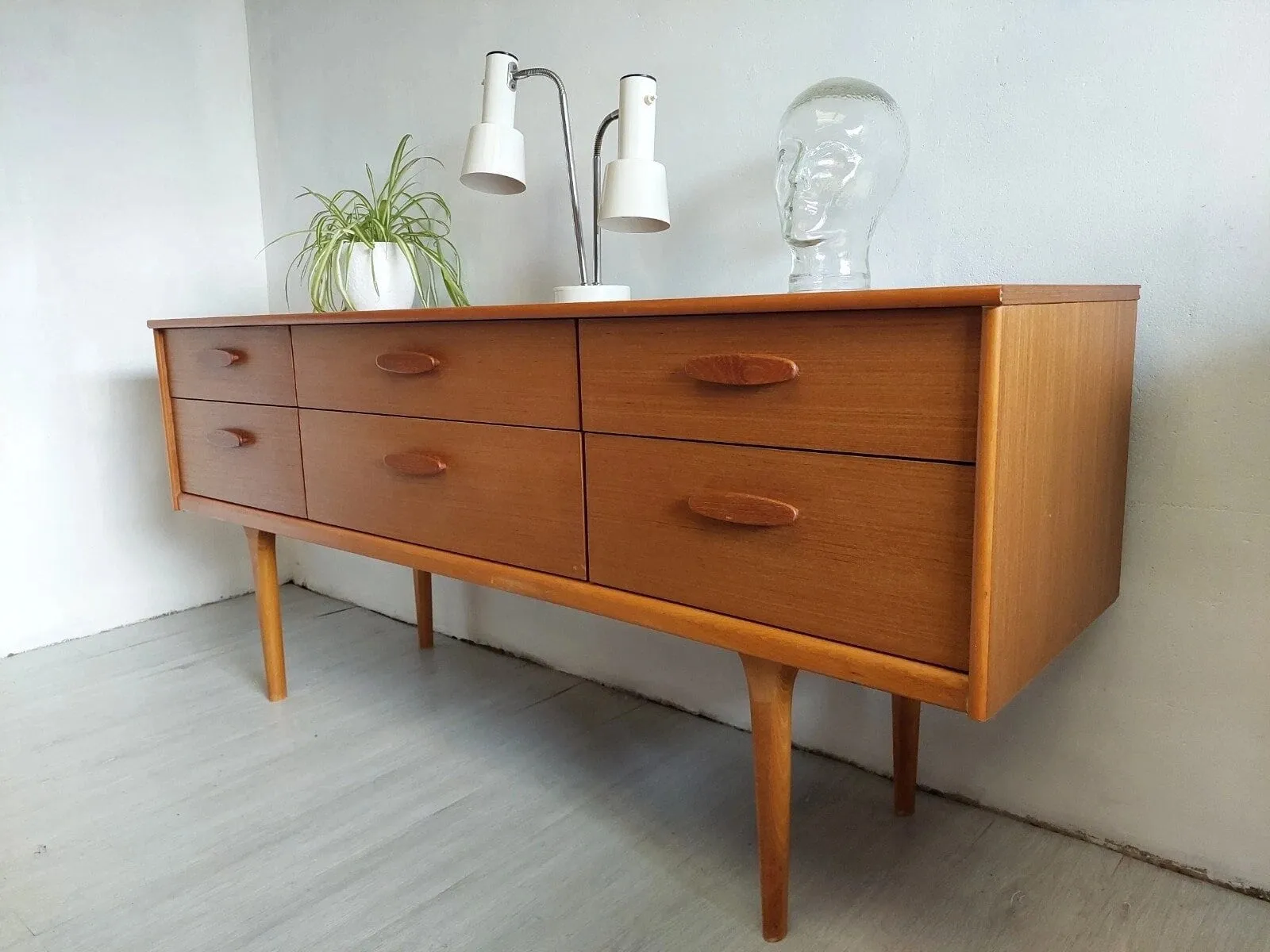
This teak 6-drawer Mid Century sideboard, found on eBay, is a prime candidate for an up-cycling project.
Community groups or marketplace apps can turn up cheap or free finds. Focus on the structure: scratches or faded varnish are no big deal, but wobbly joints or bad water damage could be a hassle.
Pick a sideboard with useful storage, like drawers for linens or cabinets for dishes, to work in dining rooms, living spaces, or hallways.
Step 2: Planning Your Design
Before you touch a paintbrush, figure out the vibe you’re after. A sideboard can set a room’s mood, so think about where it’ll go.
Hand-painted teal Edwardian sideboard via pinterest
For a Scandinavian look, try soft neutrals like pale grey or off-white with sleek brass handles. For a bohemian feel, go bold with colours like mustard yellow or deep teal, maybe adding patterned decoupage.
A dining room sideboard might need a polished finish to match nice tableware, while a living room one could go rustic with a worn-in look. Sketch your ideas or make a mood board to see how it’ll fit in.
Step 3: Preparing the Surface
Prep work is everything for a decent finish. Clean the sideboard with mild detergent and warm water to get rid of dust or grease. If it’s got glossy varnish, use a chemical stripper or sandpaper to strip it down.
For painting, sand lightly so the new paint sticks, but don’t go overboard since vintage wood often has a patina worth keeping. Fill cracks or dents with wood filler and sand smooth once dry.
Use a wood primer for painting, or a stain-blocking primer for darker woods to stop the colour bleeding through. This makes sure your finish is even and lasts.
Step 4: Upcycling Techniques to Try
Here are three easy techniques to make your sideboard stand out, based on what’s hot in decor but kept unique:
Chalk Paint for Easy Elegance: Chalk paint is great for beginners since it sticks without much prep. Pick shades like soft grey or muted green, which are big right now for their earthy feel. Slap on two thin coats with a brush or roller, sanding lightly between for a smooth finish.
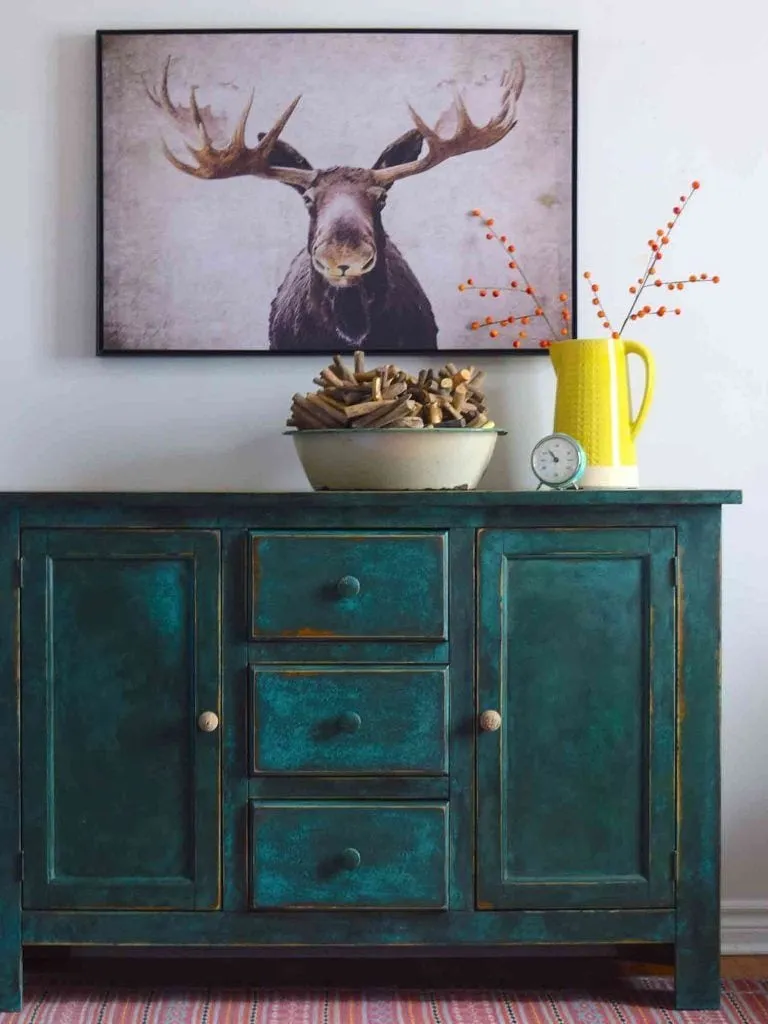
The up-cycled sideboard boasts a deep teal chalkboard finish with a rustic look. pinterest.com
Seal with clear wax or matte varnish to make it tough, especially if it’s holding heavy stuff like a record player or glassware. For a distressed vibe, sand the edges lightly to show the wood underneath, giving it a relaxed, lived-in look.
Decoupage for Bold Flair: For a sideboard that grabs attention, try decoupage on the doors or top. Use leftover wallpaper, fabric, or gift wrap with floral, geometric, or abstract patterns for an eclectic style. Cut the material to size, stick it down with decoupage glue, and smooth out bubbles with a credit card.
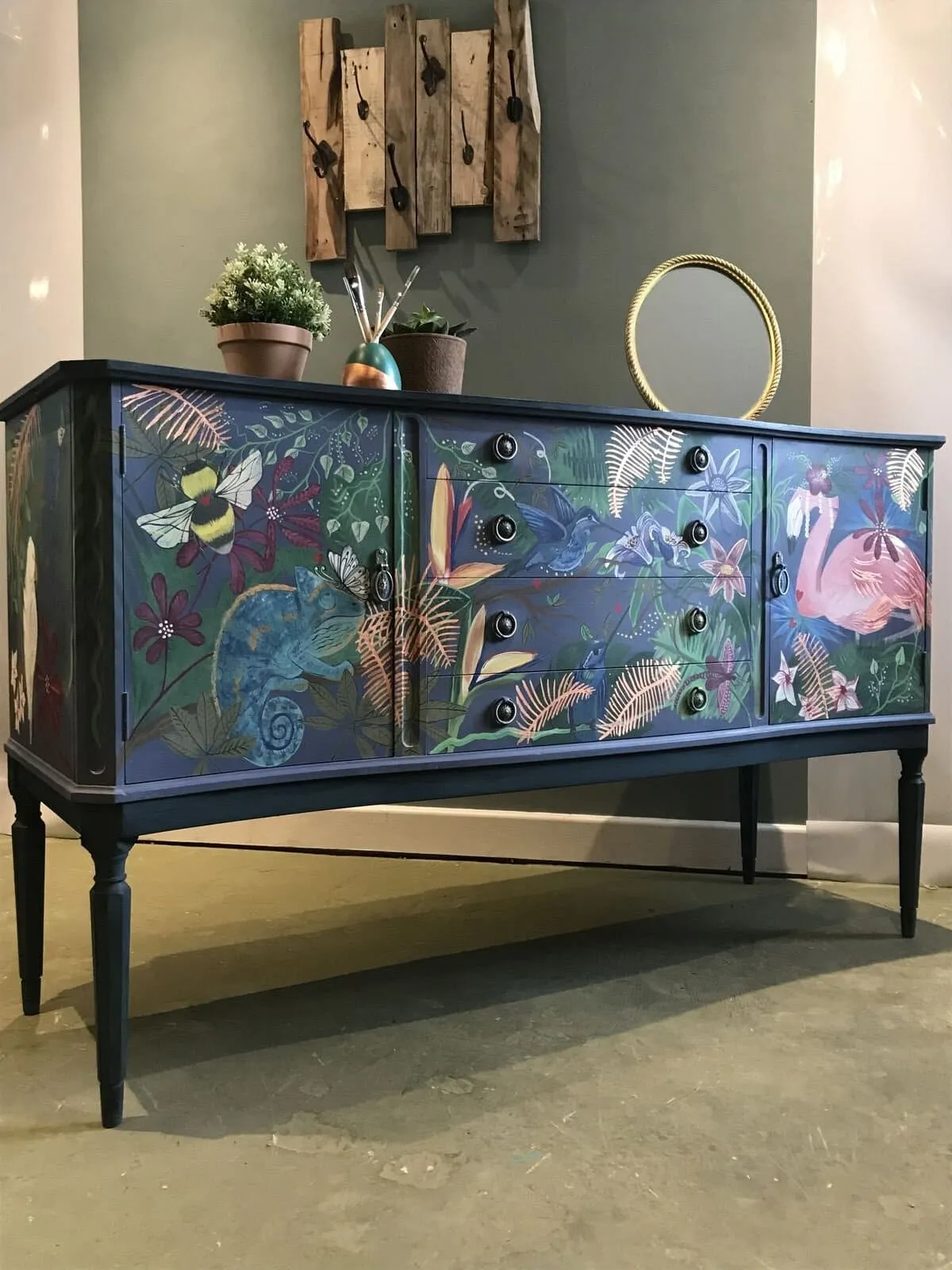
A striking sideboard, hand-painted deep blue and adorned with bold print wallpaper showcasing tropical leaves, flowers, a chameleon, a bee, butterfly, and flamingo. pinterest.com
Once dry, seal with a few layers of clear varnish to protect it. This works for a bohemian or maximalist look, adding character to a plain room.
Hardware Swaps for Quick Updates: Swapping old handles can modernise a sideboard fast. Brass or matte black knobs are stylish and add a contemporary edge. If there’s no hardware, add pulls or knobs for function and flair.
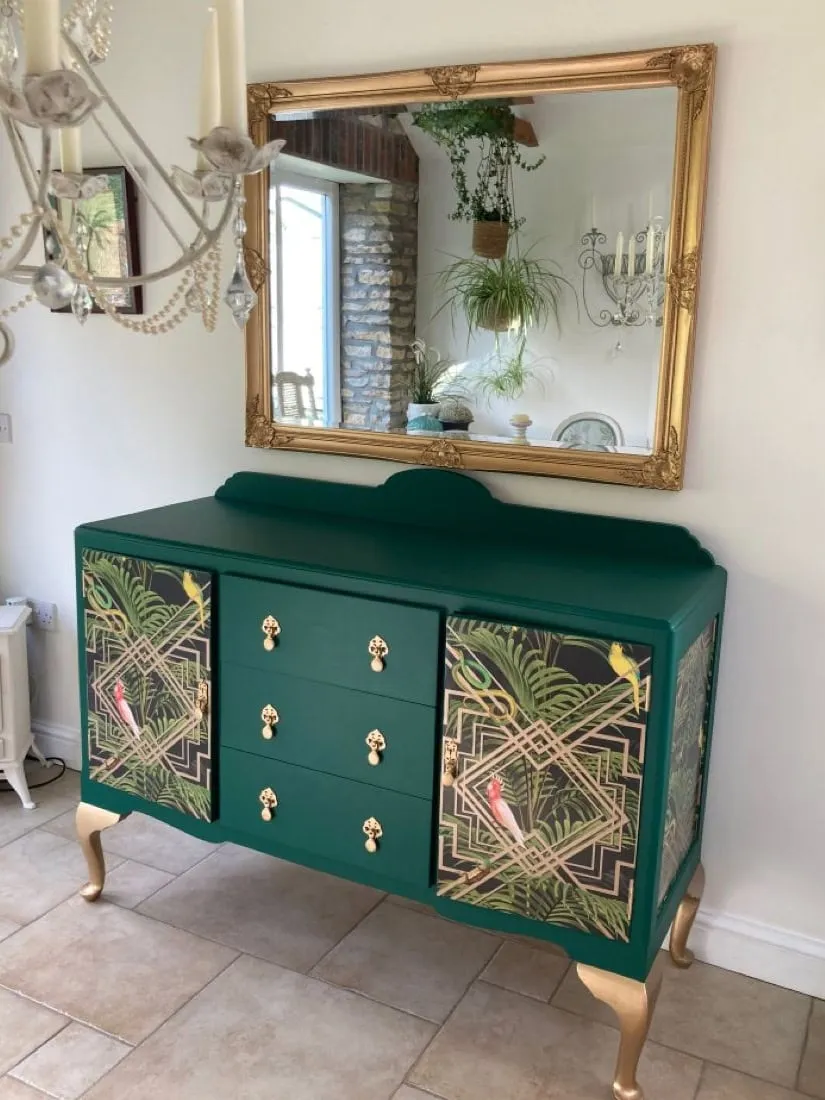
This jade green sideboard with decoupage doors and gold-painted legs is already striking, but the gold-coloured antique drop handles truly elevate its charm. pinterest.com
For a fun twist, mix handles, like ceramic knobs on drawers and brass on cabinets, but keep the finish consistent so it doesn’t look messy.
Step 5: Styling Your Sideboard
A good upcycled sideboard needs smart styling. In a dining room, put a ceramic vase with seasonal flowers or a stack of handmade plates on top for a curated feel. In a living room, try a table lamp with a linen shade, some framed photos, and a small plant like trailing ivy.
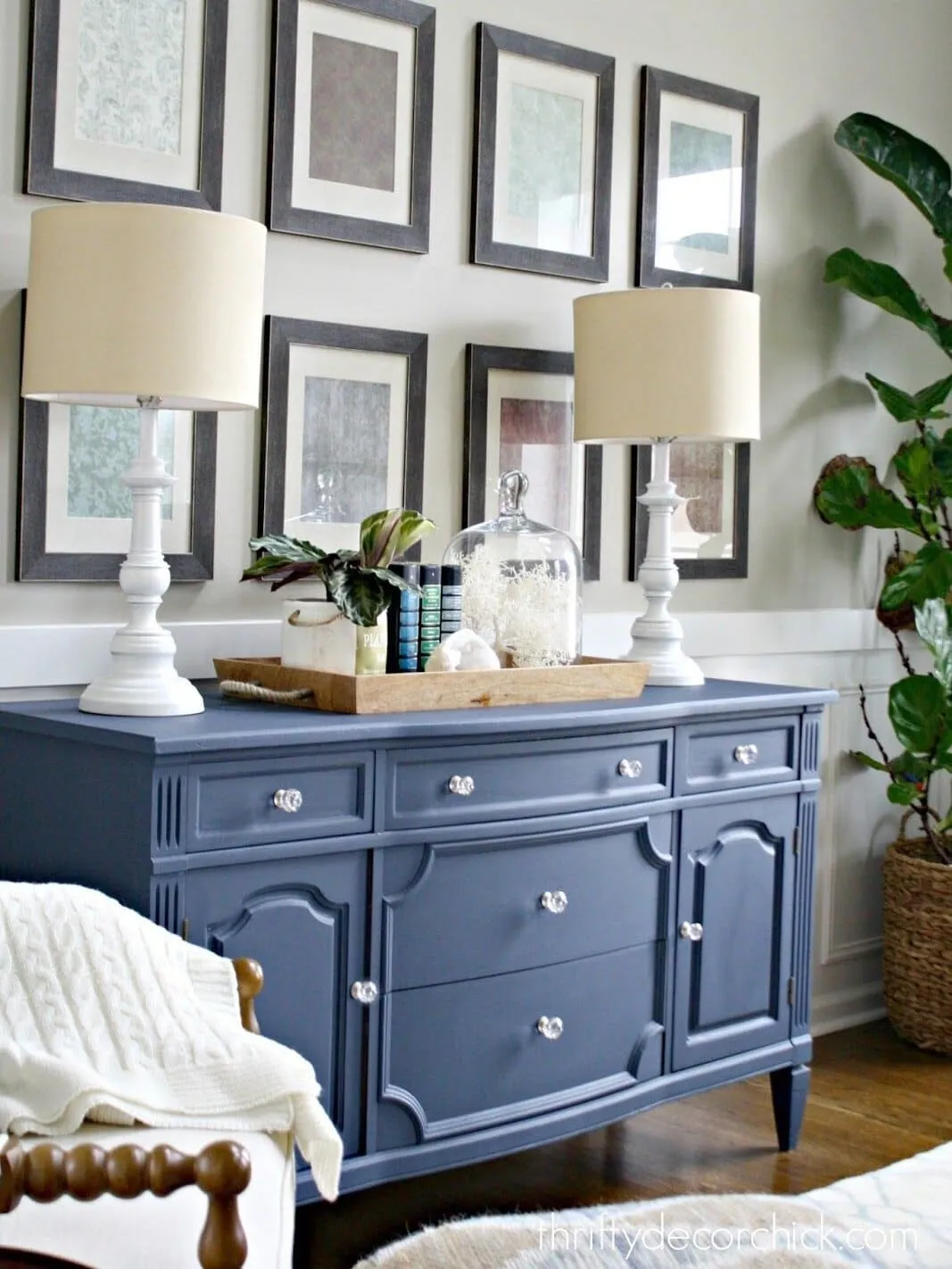
This blue sideboard has been livened up with a pair of lamps and a gallery of pictures in the background. pinterest.com
Balance the look: a long, low sideboard works with a mix of tall and short items, while a taller one looks better with less clutter. Hang a mirror or artwork above to draw the eye up and make the room feel bigger, a trick used in small spaces.
Match the sideboard’s colour or texture with accessories, like a teal cushion on a sofa if the sideboard’s painted blue.
Step 6: Sustainability and Storytelling
Upcycling is great for style and the planet. By saving a sideboard, you’re keeping it out of landfill and celebrating craftsmanship you don’t find in modern furniture. These pieces have history, maybe from a family home or a flea market, adding depth to your decor.
It’s also easy on the wallet, letting you get a high-end look without spending much. For an eco-friendly touch, use low-VOC paints or reclaimed hardware, and pick sustainable materials like organic cotton for any fabric bits.
Troubleshooting Common Issues
Upcycling isn’t always smooth. If paint bubbles, you probably didn’t sand enough; sand back and try again. If decoupage wrinkles, use less glue and work in small sections. If the wood grain looks uneven, a second primer coat can fix it. Take your time and don’t rush.
Upcycling a vintage sideboard is a fun way to make your home your own. Whether you go for a sleek painted finish or bold decoupage, you’re giving new life to a piece with history. Let’s get inspired and turn forgotten furniture into something awesome.